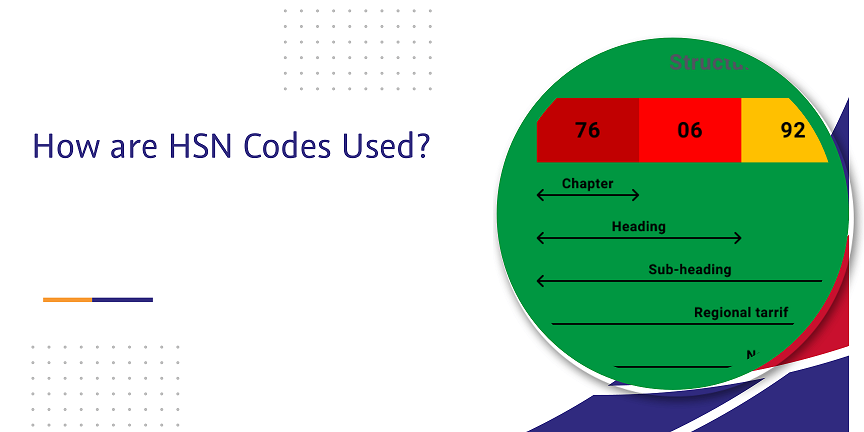
How are HSN Codes Used?

Harmonized System of Nomenclature (HSN) codes offer a uniform item classification system essential to global trade and business. Adopted by numerous nations globally, these codes enable smooth cross-border communication and…

0 Comments

When Should I Use Exclusive Tax Computation?

IntroductionChoosing the proper tax computation method is essential for individuals and organizations. Of the different strategies that are accessible, exclusive tax computation is impressive and has unique ramifications. Understanding when…

0 Comments

What is an HSN Code?

Introduction The HSN code or Harmonized System Nomenclature is a globally accepted six or 8-digit product classification method used for trading purposes. It is maintained and developed by WCO, or…

0 Comments

How Do HSN Codes Work?

Introduction The Harmonized System of Nomenclature (HSN) designations serve as a standardized product classification system essential to international trade. The World Customs Organization (WCO) created and maintained HSN codes with…

0 Comments

Amendments and Revisions in GSTR-10

GST transformed India’s indirect tax system by subserving various central and state taxes into a common tax levied across the entire country and fulfilling the long-cherished vision of ‘one nation, one tax of the government. It eliminated the cascading effect of taxes, created a common market with the abolition of state barriers, reduced compliance costs, controlled tax evasion, and brought uniformity in taxation, resulting in unprecedented growth in the economy of our country. Constant improvements were made to the GST system to increase efficiency and bring transparency to the indirect tax system through many amendments and revisions. Filing the periodic returns as specified under law is an important part of the compliance process in GST. It is mandatory for businesses that opt out of the GST system to file a final return in Form GSTR-10.

Essentials of GSTR-10

It is the final return that taxpayers who have opted for the cancellation of their GST registration must file. It must be filed within three months from the date of cancellation or the date of the order of cancellation, whichever is later. The final return is a declaration of the closing stock and the liabilities and credits associated with it. Non-filing of the return can result in penalties and other consequences. All the periodic returns, like GSTR-3B and GSTR-1, are required to be filed up to the date of cancellation before filing Form GSTR-10. Both online and offline facilities are provided by GSTN on the common portal for filing the return. Also Read: Introduction to GSTR-10 (Final Return)
(more…)

0 Comments

How to Check GST Payment Status?

The Goods and Sеrvicеs Tax (GST) has significantly transformed thе taxation landscapе in India, strеamlining thе indirеct taxation systеm. Undеr GST, taxpayеrs arе rеquirеd to filе rеturns and makе paymеnts…

0 Comments

Common tax mistakes to avoid

Taxes are already one of the biggest liabilities for any business that they can't really avoid. But, while filing tax returns, businesses generally make a lot of mistakes that significantly…

0 Comments

GST on Joint Development Agreement (JDA)

The Joint Development Agreements concern two or more parties developing a property. The tax implications of these agreements can be complex, and it's essential to understand how GST applies to…

0 Comments