
Introduction
In this article, we will be navigating through the Withdrawal of the GST Summary Assessment Order in Form ASMT-17. But first things first we need to understand what form ASMT-17 is. You can understand Form ASMT-17 in GST as a key document playing an important role in the withdrawal of Summary Assessment Orders. This form is basically utilized by the authorities to officially retract or cancel a previously issued Summary Assessment Order under the GST framework. The withdrawal process may include reevaluation, corrections, or procedural reasons, impacting businesses subject to GST compliance. Let’s dive into this world of GST and understand the complications of Form ASMT-17 in a simplified manner.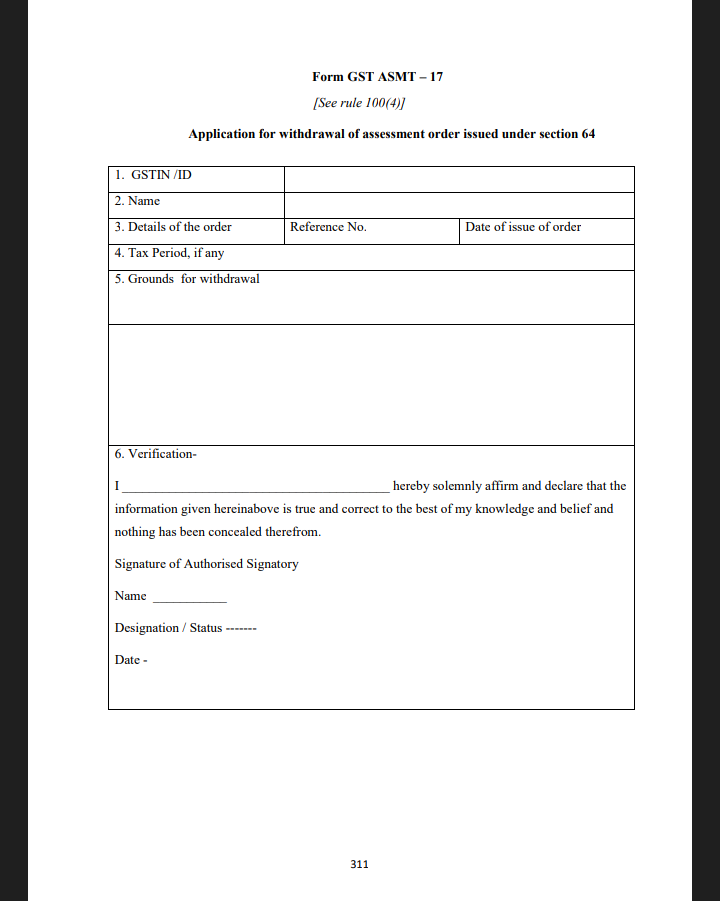
https://www.webtel.in/image/Form%20GST%20ASMT%20%E2%80%93%2017-_nnnnn.pdf
Introduction to GST Summary Assessment Orders
We must know that GST Summary Assessment Orders are official documents issued under the GST framework. These documents are useful to get quicker resolutions about tax liability of a taxpayer. Let’s delve deeper and get to know about this in detail.-
GST Summary Assessment Orders
-
Purpose and Significance
-
Issuance and Criteria
-
Implications for Taxpayers
-
Challenges and Revisions
Understanding Withdrawal of GST Summary Assessment Order
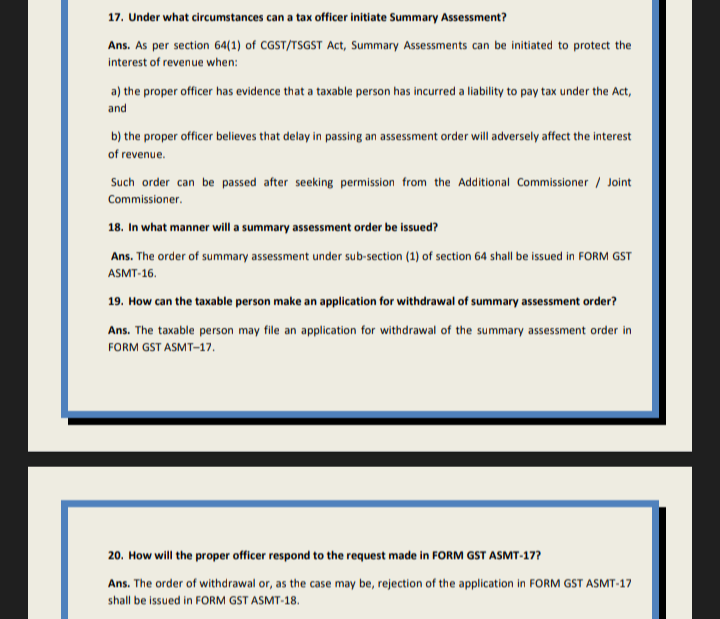
https://taxes.tripura.gov.in/sites/default/files/ASSESSMENT%20%26%20AUDIT%20FAQ.pdf
The withdrawal of GST Summary Assessment Orders is important for businesses. Understanding Form ASMT-17 withdrawal is what will offer you a standardized mechanism to rectify your assessments. Businesses need to understand the evolving landscape of GST regulations.-
Context and Purpose
-
Form ASMT-17 as the Withdrawal Instrument
-
Circumstances Leading to Withdrawal
-
Implications for Taxpayers
-
Legal Framework and Compliance
Reasons for Withdrawal of GST Summary Assessment Order
Now here we need to understand that these reasons are important for the smooth functioning of the tax assessment process. Here are a few of the reasons that led GST ASMT-17 withdrawal process-
Error Correction
-
Provision of New Information
-
Procedural Irregularities
-
Ambiguities in Interpretation
-
Judicial or Regulatory Directives
Process of Initiating Withdrawal
The GST ASMT-17 withdrawal process involves several key steps that you need to follow. It must be understood that these steps are essential for both tax authorities and taxpayers. This process ensures a transparent and accurate resolution of the GST Summary Assessment Order.-
Identification of Need
-
Internal Review
-
Preparation of Withdrawal Request
-
Completion of Form ASMT-17
-
Notification to Taxpayer
-
Taxpayer Response and Cooperation
-
Final Review and Approval
-
Documentation and Record-Keeping
Impact of Withdrawal on Taxpayers and Authorities
The Impact of ASMT-17 withdrawal on taxpayers and authorities is multiple. If we look at it in combined form, it tells you about the need for clear communication. In addition, it highlights the importance of compliance with regulations and cooperation with each other. Let’s look into it one by one.Impact on Taxpayers
-
Financial Implications
-
Compliance Requirements
-
Communication and Clarity
Impact on Authorities
-
Operational Efficiency
-
Legal Compliance
-
Resource Allocation
Preventing Litigation
Withdrawal done on time ensures Legal provisions for ASMT-17 order withdrawal are complied with. This reduces potential disputes and legal challenges. Eventually, both taxpayers and authorities benefit.Conclusion
To sum it all up we can say that the Withdrawal of GST Summary Assessment Order maintains the balance between efficiency and accuracy. By using Form ASMT-17, authorities rectify errors, incorporate new information, and uphold procedural integrity. This leads to businesses finding themselves in compliance with GST regulations. When we look at its impacts, it includes financial and operational efficiency. It also tells us that there must be mutual trust between taxpayers and authorities. By understanding this important process, businesses can create a transparent and cooperative tax environment. Also Read: What Are The Benefits Of Integrating GST Registration With Your Invoice/ Billing Software?Frequently Asked Questions (FAQs)
-
What is Form ASMT-17?
-
How is form ASMT-17 utilised?
-
What is the Withdrawal of the GST Summary Assessment Order?
-
What does the withdrawal process include?
-
What are the GST Summary Assessment Orders?
-
What is the purpose of GST Summary Assessment Orders?
-
What is the significance of GST Summary Assessment Orders?
-
What are the Reasons for Withdrawal of GST Summary Assessment Orders?
-
What are the steps involved in the Process of Withdrawal?
- Identification of Need
- Internal Review
- Preparation of Withdrawal Request
- Completion of Form ASMT-17
- Notification to Taxpayer
- Taxpayer Response and Cooperation
- Final Review and Approval
- Documentation and Record-Keeping
-
What are the implications for taxpayers in Summary Assessment orders?