
In today’s world where everything seems to be speeding up, organizations have to run a fast race to keep pace. Thus, issuing e-invoices is where electronic invoicing is necessary. Suppose you are going to write it to your friend. You will, possibly, compose it by hand, put it in the envelope, and post it with snail mail or you might compose it by typography, hit a button and your friend gets it straight away. Electronic invoicing is where the invoices that would, earlier, be printed out and sent via snail mail are sent as an email instead. Why is this so significant for, in particular, contemporary businesses? In this case, we are talking about classic invoices that include an immense amount of work in terms of their creation, printout, and mailing. It is not only time-consuming but also most of the time, it is error prone.
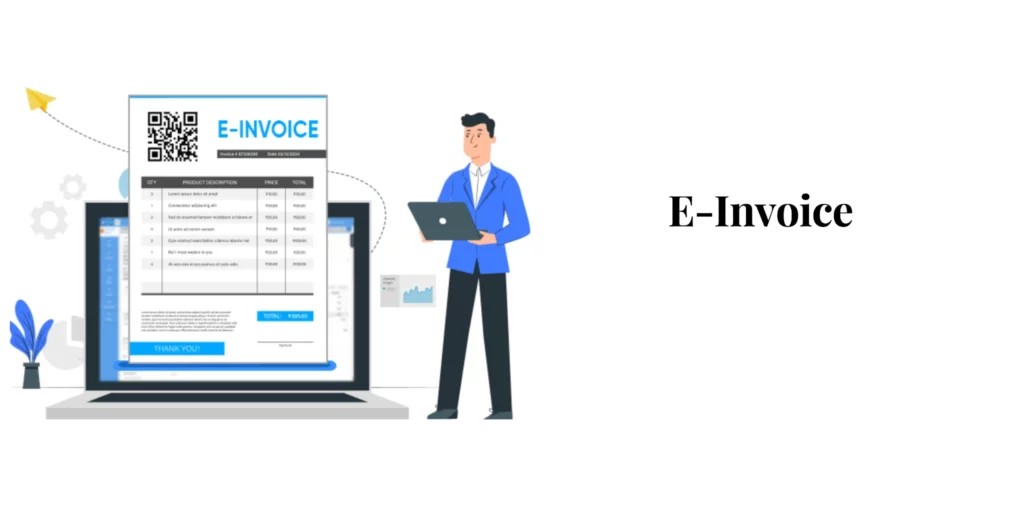 The E-invoice gets generated and is directly distributed to the recipient’s email address or is made accessible in a secured online account on web portals. Once it is received, the invoice can be examined by the receipt of the document, sure it is correct in their records and complete electronic payments. The electronic invoicing is more effective than the handwritten in the paper-based payment process. It diminishes ink, paper, and mailing costs which eliminates the administrative burden associated with the printing, patching, and processing of paper invoices, resulting in cost savings and increased efficiency.
Electronic bills can be submitted and settled more rapidly, thereby bettering cash flow management for the companies and for their customers. E-invoicing brings forward a high-tech way, which is more convenient and eco-friendly for companies to handle their billing processes. Through e-Invoicing, organizations can make a significant step towards achieving operational efficiency, cutting costs off, improving cash flow, higher accuracy and the support of sustainability.
The E-invoice gets generated and is directly distributed to the recipient’s email address or is made accessible in a secured online account on web portals. Once it is received, the invoice can be examined by the receipt of the document, sure it is correct in their records and complete electronic payments. The electronic invoicing is more effective than the handwritten in the paper-based payment process. It diminishes ink, paper, and mailing costs which eliminates the administrative burden associated with the printing, patching, and processing of paper invoices, resulting in cost savings and increased efficiency.
Electronic bills can be submitted and settled more rapidly, thereby bettering cash flow management for the companies and for their customers. E-invoicing brings forward a high-tech way, which is more convenient and eco-friendly for companies to handle their billing processes. Through e-Invoicing, organizations can make a significant step towards achieving operational efficiency, cutting costs off, improving cash flow, higher accuracy and the support of sustainability.
E- Invoice
E-invoicing, also called electronic invoicing, is the digital substitute of the more conventional paper-based invoicing system that is used by organizations to issue invoices to their clients for the delivery of goods and services. Instead of executing paper invoices, businesses instead produce corresponding electronic versions which are then sent electronically or in any other way over the internet to their customers. E-invoicing refers to invoicing accomplished whenever invoices are created, delivered and processed digitally. Such a procedure mostly takes place by employing dedicated software, online platforms or EDI systems.
The E-invoice gets generated and is directly distributed to the recipient’s email address or is made accessible in a secured online account on web portals. Once it is received, the invoice can be examined by the receipt of the document, sure it is correct in their records and complete electronic payments. The electronic invoicing is more effective than the handwritten in the paper-based payment process. It diminishes ink, paper, and mailing costs which eliminates the administrative burden associated with the printing, patching, and processing of paper invoices, resulting in cost savings and increased efficiency.
Electronic bills can be submitted and settled more rapidly, thereby bettering cash flow management for the companies and for their customers. E-invoicing brings forward a high-tech way, which is more convenient and eco-friendly for companies to handle their billing processes. Through e-Invoicing, organizations can make a significant step towards achieving operational efficiency, cutting costs off, improving cash flow, higher accuracy and the support of sustainability.
Comparison of E-Invoicing and Traditional Paper-Based Invoicing Processes
| Point | E-Invoicing | Traditional Paper-Based Invoicing |
| Method of Invoicing | Electronic transmission via internet or EDI | Printing physical invoices and mailing them |
| Generation of Invoices | Digital creation using specialized software | Manual creation using paper and pen |
| Delivery to Customers | Email or secure online portals | Postal mail |
| Processing and Payment | Electronic processing and payment methods | Manual data entry and physical check writing |
| Efficiency | Faster processing and payment | Slower processing and payment |
| Accuracy | Reduced errors through automation | Higher risk of errors due to manual entry |
| Cost | Lower administrative and postage costs | Higher printing, postage, and processing costs |
| Tracking and Visibility | Real-time tracking and status updates | Limited visibility into delivery and payment status |
| Environmental Impact | Reduced paper usage and carbon emissions | Paper consumption and waste generation |
| Compliance with Regulations | Supports compliance with e-invoicing mandates | Limited support for e-invoicing regulations |
Technological Foundations of E-Invoicing Systems
The essential technology behind e-invoicing systems is the electronic data interchange (EDI) coupled with cloud-based solutions; these provide an avenue for the electronic transmission of invoices between businesses.-
Electronic Data Interchange (EDI):
-
Cloud-Based Solutions:
Improved Efficiency and Faster Processing with E-Invoicing
Speeding Up the Invoicing Process with E-Invoicing
-
Elimination of Manual Data Entry:
- In the traditional manual paper invoicing mode, invoices are usually created on paper and the data we mean by invoice number, item description, quantity and price must be typed in the systems accounting or spreadsheets.
- E-invoicing in this way automates that task and it produces invoices electronically from these pre-defined templates or data stored in business systems. Manual data entry is not needed since automation through machine learning is provided, cutting down time and reducing errors.
- E-invoicing avoids flaws related to inaccuracy and inconsistency of information and human manipulation since it takes data from internal systems, or databases and automatically puts the invoice information in the required format.
-
Standardized Formats and Templates:
- E-invoicing systems commonly operate using standardized formats and templates, which are XML or PDF and get along with accounting software and global standards like business codes.
- These standardized protocols, by its aspect of standardization and compatibility of various business systems and organizations, make the invoicing process with haste and simplicity.
- Along with multiple predefined templates businessmen can easily generate invoices with necessary information already predefined. This requires less time for the creation and formatting of invoice manually thus reducing the time required.
-
Automation of Workflows:
- E-invoicing platforms automate the invoicing workflows, ranging from the actual creation of the invoice to its delivery and ultimately, payment processing.
- The invoice is done once it is generated and is automatically sent to the recipient via email or the online portal.
- Management options include providing scheduling of recurring invoices, set-up of automatic reminders to debtors and even initiating payment processing without manual efforts.
- Automation, through the cutting off the need for human track and input, results in the speeding up of the whole invoicing process, which results in faster delivery, processing and payment of the invoices.
-
Real-Time Tracking and Monitoring:
- E-invoicing systems functioning in real-time allow businesses to trace the route that invoices have taken throughout the whole cycle.
- Companies can have real-time insights about when invoices are delivered to, viewed by and ultimately paid by the recipients hence can actively track their business payment issues and address them proactively.
- In real-time, you do not need to worry about invoice status checking because invoicing processes are no longer delayed due to follow-up or reconciliation processes that involve you doing it manually.
Reducing Human Error and Enhancing Workflow Automation with E-Invoicing
- Reducing Human Error:
- Improving Workflow Automation:
Cost Reduction Strategies Enabled by E-Invoicing
Leveraging e-invoicing in your organization creates a wide variety of business cost reduction strategies. This happens because organizations discard the need of the paper-based processes, such as printing the invoices and sending them in mail and in turn, they are reduced on the stationery and postage expenses. Automation of invoicing duties is time-saving as it reduces the administrative burdens allowing for the engagements that are valuable. With digital invoices, companies no longer need to keep the paper documents physically, this will also bring the cost of storage area down and improve invoice discipline.Cost Savings Analysis of E-Invoicing Implementation
Moving to e-invoicing yields significant cost savings across multiple areas:- Paper Savings:
- Postage Savings:
- Reduction in Administrative Overheads:
- Enhanced Efficiency and Time Saving:
- Minimized Storage Costs:
Enhancing Compliance with Tax Regulations
The introduction of e-invoicing systems as a means of complying with the tax rules, enhances the accuracy and the transparency of financial transactions, which is a must-have for every taxpayer. Electronic invoicing comprises creation, electronic transmission, and digital storage of invoices which satisfy the legal necessities of the tax authority. The electronic logs of invoices contribute to the precision of sales tax collection by automating the process of proper record keeping, timely filing and accurate reporting. Furthermore, e-invoicing platforms mostly contain functions like digital signatures and audit trails that offer more compliance with the absence of the need for a third party and the digital invoices being traced. As e-invoicing offers the opportunities to automate invoicing processes, reduce errors, and provide secure documents for tax authorities, e-invoicing can be seen as a way to facilitate tax compliance.E-Invoicing: Enhancing Tax Compliance with Accurate Records
E-invoicing is of utmost significance because it helps to have better compliance with GST and other obligations of tax and by ensuring that perfect records are maintained from the start to the end of the financial transactions. Here’s how:-
Automated Data Capture:
-
Real-Time Validation:
-
Digital Signatures and Authentication:
-
Audit Trails and Documentation:
-
Integration with Tax Reporting Systems:
-
Timely Reporting and Payment:
Features for Maintaining Up-to-Date Records and Generating Compliant Reports
E-invoicing systems offer specific features designed to maintain accurate records and generate reports that comply with legal standards-
Automated Data Capture:
-
Real-Time Validation:
-
Digital Signatures and Authentication:
-
Audit Trails and Documentation:
-
Integration with Tax Reporting Systems:
-
Customizable Reporting Templates:
Adherence to International Standards
International standards compliance is important for those companies that provide products or services globally as it creates common ground, tie-up of processes and regulations synchronization across alliance borders. In terms of this, invoicing via the internet acts as the most important factor by helping in the adoption of normalized formats, such as the UN/CEFACT XML or UBL. These are all recognized and accepted internationally. International standards upholding mechanisms show investors that the company is compliant, has transparency, good business practices, and efficiency, thereby building brand trust and credibility in global business. By and large, E-invoicing is a tool that achieves international standards and thus contributes greatly to building interoperability, facilitating cross-border trade as well as the growth and competitiveness of enterprises in the international marketplace.Importance of Following International Invoicing Standards and E-Invoicing Solutions
International invoicing standards are vital for businesses that do business globally, ensuring general universal acceptability and corresponding complications with national laws. Here’s how e-invoicing solutions are equipped to handle these requirements-
Standardization for Global Compatibility:
-
Facilitating Cross-Border Transactions:
-
Compliance with Regulatory Requirements:
-
Enhancing Efficiency and Accuracy:
-
Promoting Transparency and Trust:
Seamless Integration with Existing Financial Systems
Integration of new financial instruments with established systems is the key particularity of advanced e-invoicing platforms that ensure smooth communication and data sharing between e-invoicing and accounting or ERP software. The e-invoicing platforms can instantly synchronize the invoice data automatically and ensure consistent updates in systems across the board. Integration helps to simplify the process, eliminates the possible mistakes and makes users have up-to-date figures, precise data and high level performance in terms of costs, efficiency, and time.Integration with Financial Systems and ERP Software
Nowadays, modern E-invoice platforms provide seamless integration with different financial management systems, and the ERP systems to ensure that business activities are well coordinated by creating a working environment that improves efficiency and accuracy. Here’s how this integration works:-
Automated Data Exchange:
-
Streamlined Invoice Processing:
-
Real-Time Data Synchronization:
-
Enhanced Visibility and Reporting:
-
Customized Workflows and Approvals:
-
Scalability and Flexibility:
Data Security and Fraud Reduction
E-invoicing platforms ensure that data security and minimal fraud are always prioritized. The systems implement the encryption for transmission and storage facility of data as well as controls for access to keep away unauthorized people. Digital signatures guarantee the identity of invoices and digital trails tracing all activities, is made up for monitoring and investigating. Latest detecting fraud algorithms highlight the suspicious patterns, and integral standards lead the follow up with the laws. Therefore, fleeing these measures puts the e-invoicing system at the risk of data loss, as well as other possible negative consequences that may occur as a result of fraud.Advanced Security Protocols and Features in E-Invoicing Systems
E-invoicing systems employ advanced security protocols and features to safeguard sensitive financial data and mitigate the risk of fraud:-
Encryption:
-
Access Controls:
-
Digital Signatures:
-
Audit Trails:
-
Fraud Detection Algorithms:
-
Compliance Standards:
Contributing to Environmental Sustainability
E-invoicing involves the sending and receiving of invoices through electronic means. This means that the paper consumption reduces drastically, CO2 emissions linked with postal mail delivery is also minimal and electronic documentation in the office is promoted. Since the paper invoices usage is cut down with an e-invoicing system, few trees get eliminated as well. Natural resources are then conserved. The hardcopy invoice replaces with email invoices consequently the carbon footprint associated with printing, mailing, and transporting the paper invoices diminishes this sharing a contribution to the decrease of greenhouse gas emissions. Eco-friendly norms are declared through these platforms by encouraging the element of electronic document management in organizations, thereby lessening the overall usage of paper and consequently waste generation. E-invoicing has a very less harmful effect on the environment compared to the traditional invoicing methods, making it one of the areas that can play an instrumental role to help the world curb the climate change and prevent the degradation of the environment.Environmental Benefits of Going Paperless with E-Invoicing
A choice to use e-invoicing not only ensures the protection of the environment, but also matches the same objectives of the green companies. The change to paperless invoicing system within business definitely plays off paper consumption, hence it can achieve conservation of natural resources like paper and makes lower deforestation possible. Furthermore, electronic invoices process the same but no production of paper, printing, and transportation is involved, thus reducing the emission of carbon and thus the environmental impact. Implementing e-invoicing supports eco-projects, which are part of the sustainable mission and show our environmental protection responsibility and our attitude towards concerned business practices. Eco-friendly invoicing alongside digital payment is championed since it enhances an environmentally friendly lifestyle and minimizes the business operation ecological footprint.The Future of Business Transactions
The digital world is shaping the future of business payment, as efficient options and technologies such as e-invoicing, blockchain, and digital payment systems are taking over. With more and more business sectors are digital transformation, the work processes which used to be paper based are increasingly being replaced by the most advanced modern technology which is efficient and secure as well as being environmentally friendly. E-invoicing will significantly influence this transition that it already proposed a smart and convenient solution to invoicing practices with an increased accuracy and reduced chances for hacker attacks. In addition, blockchain and digital payment systems evoke the transformation of transactions by bringing transparency and trustworthiness at the same time offer the ease of use and convenience. These innovations imply a period where doing business with each other is smooth and secure as well as environmentally friendly systems are the real Matter, creating so, a new era of commerce has come along with the digital age.E-Invoicing in the Broader Trend of Digital Transformation
E-invoicing being a solid foundation facilitating a digitally driven transformation of business transactions is contributing to financial and business efficiencies on a large scale. Here’s how:-
Automation and Efficiency:
-
Data Integration and Connectivity:
-
Enhanced Security and Compliance:
-
Cost Savings and Sustainability:
-
Global Reach and Accessibility:
Future Developments to Enhance E-Invoicing Technologies
Several advancements hold the potential to further enhance e-invoicing technologies in the future-
Artificial Intelligence (AI) and Machine Learning:
-
Blockchain Technology:
-
IoT and Smart Contracts:
-
Digital Identity and Authentication:
-
Interoperability Standards:
-
Mobile and Cloud Technologies:
Why Should Businesses Adopt E-Invoicing Now?
Companies should have been using E-Invoicing already to avoid unnecessary and costly invoicing procedures, save time and money, and improve efficiency as well. An E-invoicing procedure removes printing and postage costs, because it automates the invoicing distribution system without the necessity of storing paper. It automates bill generation, transmission and processing. This significantly cuts down error and therefore, speeds up payment cycles. Moreover, e-invoicing increases safety and lays a foundation for controlling traces left on financial transactions. Adoption of e-invoicing enables businesses to turn their process into a modern one, deliver efficient services, and attract more customers which leads to a competitive advantage in the digital economy.The Imperative of Embracing E-Invoicing for Competitive Advantage
Utilizing e-invoicing technology represents a strategic option in industrial and commercial environments, where firms want to retain their competitive positions. Like it or not, the disruptive technological environment is doing everything in its power to change organizations for the better by allowing the companies to use advanced technologies in order to make their processes more efficient, respond to the ongoing shifts in the market demand, and predict the future. As the customers are constantly seeking to enjoy the convenience that digital platforms offer and also the pressure As the days go by with the regulatory bodies, the traditional paper-based invoicing methods are no longer sustainable to meet the needs of the market in this modern business environment. E-invoicing will also provide easier compliance with mandatory regulations, minimize cases of fraud, and improve data security, which is very important in an era of elevated online fraud and data breaches.Potential Risks of Delayed Adoption
-
Falling Behind Competitors:
-
Losing Customers:
-
Wasting Resources:
-
Missing Growth Opportunities:
-
Security Risks:
-
Losing Talent:
-
Limited Adaptability:
-
Missed Innovation:
Experience Seamless Invoicing with CaptainBiz E-Invoicing Solutions
Let CaptainBiz E-Invoicing be your partner in revolutionizing your business by saving you time and money. The digital era has hit the accounting world hard. A paperless work environment is no dream anymore; welcome this digital era in bill management. Our cutting-edge platform simplifies the invoicing process, allowing you to focus on what truly matters and forces you to revise your business plan for further expansion.Why Choose CaptainBiZ E-Invoicing?
-
Streamlined Workflow:
-
Instant Delivery:
-
Enhanced Security:
-
Cost Efficiency:
-
Compliance Ready:
Unleash the Power of CaptainBiz E-Invoicing
-
Customizable Templates:
-
Automated Reminders:
-
Multi-Currency Support:
-
Real-Time Tracking:
-
Integration Capabilities:
-
Customer Portal:
-
Mobile Accessibility:
-
24/7 Customer Support:
Claim Your Free Trial or Consultation Today
Explore the benefits and efficiency of CaptainBiz electronic invoicing services accompanied by a no charge session and professional recommendations from our team. Discover and experience, at your pace and ease, billing simplification with our user-friendly interface, explicitly designed to lift the burden of billing from your back and to accelerate your business. Whether you’re a small businessman or a large corporation, CaptainBiz corrects these needs, adapting itself to your needs in terms of flexibility and scalability. Trust us for our history and reliability, and join the numerous businesses worldwide who already discover the invoicing of the future with CaptainBiz. Don’t keep yourself from it, use your free trial or consultation to decide whether CaptainBiz is your thing or not and reveal your capacities for your business.What’s in Store for You
-
Trial Delight:
-
Expert Guidance:
Why Choose CaptainBiz?
-
Innovation at its Core:
-
User-Centric Design:
-
Reliability and Trust:
Tailored Trials for Your Business
CaptainBiz takes the step forward by proposing personalized mandatory services in which participants get a chance to participate in free-training sessions that are customized to match the company’s goals. During our demonstration, we will show you how you can interactively experience how our leading edge e-invoicing solution takes into account your particular problems and simplifies how data is processed. Whether you’re seeking particular functionality, integration modules, or just considering an adaption of those on offer, our custom trails offer you the possibility to do this and more importantly, experiment with what you need. Through a CaptainBiz delivery that respects your business needs, you will acquire crucial information that ensures your managerial decision is informed and makes you well equipped for success. Don’t choose the regular pathways, go for personalized travels with CaptainBiz and find the glorious invoicing for your company instead.Conclusion
E-invoicing is a must-have tool for modern business because it solves the issues of the slow pace, high costs and lack of security of traditional invoicing. One of the factors is that it saves time, money, and eliminates the possibility of erroneous activities which leads to a more streamlined and efficient transaction. Utilizing CaptainBiz E-Invoice among businesses avails businesses the unparalleled power of electronic invoicing which they can now employ to fine-tune their operations, be at the forefront of the digital age, and operate with efficacy and efficiency. They are able to stand out and succeed in today’s highly competitive markets.FAQ
-
What is e-invoicing and how does it work?
-
What is so fundamental for business is e-invoicing?
-
What CaptainBiz E-Invoice service will be of use to businesses and how?
-
Is e-invoicing secure?
-
Do e-invoices work compatible with existing financial systems?
-
In which direction does e-invoicing contribute to compliance?
-
Does e-invoicing provide an opportunity for any type of businesses regardless of the sizes?
-
What advantages can e-invoicing bring in financial terms?
-
For an easier integration of e-invoicing, what can the business make a start with?
-
What kind support is there for organizations, which use e-invoicing?

