
I. Introduction to GST and Compliance
The Goods and Services Tax (GST) represents a significant shift in India’s indirect tax structure, unifying numerous central and state taxes into a single tax system. This comprehensive tax system aims to eliminate the cascading effect of taxes, fostering a more seamless national market and a transparent tax regime. Compliance within this GST framework is paramount, as it ensures the smooth functioning of the tax system and fair competition among businesses. A thorough understanding of GST compliance forms is essential for accuracy in tax filings, as it impacts everything from input tax credits to final tax liability. Understanding GST forms like GST Form DRC-01B is crucial for any business. These forms help make sure that you’re paying the right amount of taxes. Getting these forms right keeps your business in good standing and avoids trouble with tax authorities. We’re going to look closely at what you need to fill out Form DRC-01B and compare two other forms, GSTR-1 and GSTR-3B. Knowing the differences between them is important for managing your taxes well.
II. Understanding Form DRC-01B
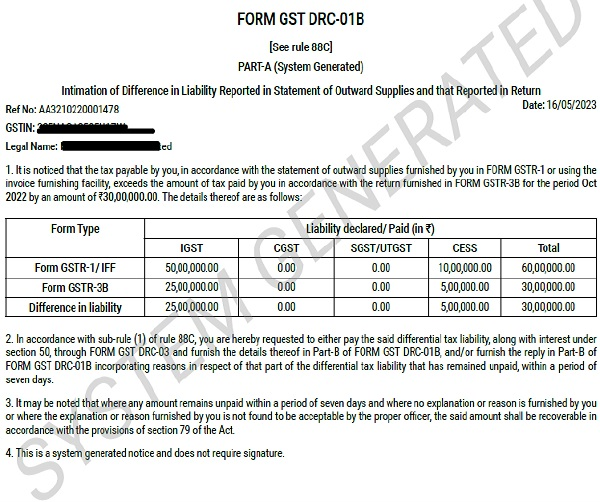
GST Form DRC-01B is a form of significant importance used within the GST framework, primarily serving the purpose of tax discrepancy resolution. This form acts as a formal intimation to taxpayers when a discrepancy in tax payment is identified by tax authorities during an audit, inspection, or assessment, requiring the taxpayer to explain or rectify the issue.
Businesses may need to use GST Form DRC-01B under various circumstances, typically when notified of a mismatch or additional liability after a government tax audit. The form is integral to ensuring that businesses and the GST authorities are on the same page regarding tax dues and payments.
The context in which GST Form DRC-01B is employed is crucial as it underscores the importance of accurate GST filings and adherence to compliance standards. It is a response mechanism that allows taxpayers to address and rectify discrepancies, thus avoiding potential penalties or interest on delayed payments. By fulfilling Form DRC-01B filing requirements, businesses demonstrate their commitment to maintaining compliance with GST regulations, which is instrumental in the transparent functioning of the tax system.
III. Key Components of Form DRC-01B
Form DRC-01B is essential in GST compliance, facilitating communication between taxpayers and authorities regarding tax discrepancies. The form includes several key components:- Tax Period: The specific period during which the discrepancy occurred.
- Reference Numbers: Any associated audit or investigation reference numbers.
- Discrepancy Details: Description of the nature of the tax discrepancy.
- Tax Amounts: The amount of tax and interest involved.
- Documents Attached: A checklist of documents submitted along with the form.
IV. Comparison: GSTR-1 vs. GSTR-3B
| Feature | GSTR-1 | GSTR-3B |
| Purpose | Reports details of outward supplies | Summarizes tax liability, claims ITC |
| Filing Frequency | Monthly or quarterly | Monthly or quarterly for all taxpayers |
| Who Files | All registered taxpayers except those on the composition scheme | All regular taxpayers |
| Contents | Detailed invoice-wise information for all outward supplies | Consolidated summary of inward and outward supplies, including tax liability and ITC claimed |
| Used for | Compliance and transparency in sales transactions | Payment of tax and filing of tax summary |
| Impact on ITC | Does not directly impact ITC claims | Crucial for claiming and reconciling ITC |
| Deadline | 11th of the following month for monthly filers or last day of the month following the quarter for quarterly filers | 20th of the following month |
V. Understanding GST Compliance
The system of GST compliance is designed to streamline the tax regime across India, making it essential for businesses to adhere to a set of rules and filing requirements. Timely and accurate filings are the foundation of this system, which prevents tax evasion and ensures transparency. Each GST return, from GST Form DRC-01B to the more frequently used GSTR-1 and GSTR-3B, plays a specific role in this process. The importance of understanding these compliance requirements cannot be overstated. A solid grasp of these obligations helps businesses to avoid penalties, interest, or even legal action due to non-compliance. It also helps in maximizing the benefits of ITC and maintaining healthy cash flows, underpinning the importance of accurate GST filings.VI. Detailed Analysis of GSTR-1
GSTR-1 is a return form that is an integral part of the GST compliance process. It is required to be filed by all registered businesses except those opting for the composition scheme. GSTR-1 captures details of all outward supplies or sales, making it crucial for the calculation of a business’s GST liability. In understanding this form, it becomes clear that it is not just about reporting sales but also about ensuring that the input tax credits are correctly claimed by recipients. Any errors in GSTR-1 can lead to ITC issues for the buyers, which is why understanding GST compliance forms, particularly GSTR-1, is critical. It directly affects the accuracy of GST calculations and, by extension, the entire tax liability of the businesses involved. Thus, a detailed analysis of GSTR-1 should cover its structure, filing deadlines, and its role in the reconciliation of ITC, highlighting its significance in the broader context of GST compliance.VII. In-depth Examination of GSTR-3B
GSTR-3B functions as a self-declaration summary of taxes payable and Input Tax Credit (ITC) claimed for a particular tax period. This form encapsulates consolidated information about GST liabilities and credits, including details of outward supplies, inward supplies subject to reverse charge, and the total tax payable. The reconciliation of GSTR-3B with GSTR-1 is an important aspect of GST compliance. GSTR-3B is designed to confirm the ITC amounts and tax payments declared in GSTR-1, ensuring they align with the actual tax liability. This process helps in identifying any GSTR-1 vs GSTR-3B difference that may exist due to reporting errors or omission of transactions. Accurate reconciliation supports the importance of accurate GST filings and allows taxpayers to rectify any discrepancies in subsequent filings.VIII. Form DRC-01B in Practice
In the practical GST compliance process, GST Form DRC-01B is a crucial document for businesses facing additional tax liability post-audit. For example, a manufacturing company audited by GST authorities might receive a notice of tax discrepancy based on unreported sales. The company would then utilize Form DRC-01B to declare this additional liability and provide explanations or documentation to substantiate its case. The Form DRC-01B filing requirements include a complete disclosure of additional tax due, along with interest or penalties, if applicable. Businesses must accurately fill and submit this form within the time frame specified by the authorities. Real-life case studies show that proper adherence to these requirements can help businesses manage potential tax disputes efficiently, further emphasizing the importance of accurate GST filings in maintaining compliance and ensuring fiscal responsibility.IX. Conclusion
In conclusion, mastering GST forms like GSTR-1, GSTR-3B, and Form DRC-01B is essential for compliance and financial stability. Accurate filings prevent penalties and uphold business credibility. Looking ahead, it’s vital for businesses to stay updated with GST regulations to ensure continued compliance and make the most of tax benefits. Keeping up with these changes is crucial for maintaining a healthy financial standing and avoiding costly errors. Also Watch: How to create E-way Bill With CaptainBizX. Frequently Asked Questions (FAQs)
-
What is GST Form DRC-01B and when is it used?
-
Can you explain the GSTR-1 vs GSTR-3B difference?
-
What are the Form DRC-01B filing requirements?
-
Why is understanding GST compliance forms important for businesses?
-
Why is accurate GST filings important for a business?
-
How often should businesses review and submit GST Form DRC-01B?
-
What happens if there’s an error in GST Form DRC-01B?
-
Can you highlight a significant GSTR-1 vs GSTR-3B difference in terms of ITC claims?
-
Are there specific deadlines for the Form DRC-01B filing requirements?
-
In what ways can inaccuracies in understanding GST compliance forms affect a business?

