
Enterprises thrive on manufacturing efficiencies derived from optimum asset utilization, working capital optimization, and nurturing core competencies. Job work offers one such avenue, providing accessibility to external partner skills, buffer inventory reductions, and improved time-to-market capabilities.
However, when such temporary goods transfers warrant inter-state movement, applicable GST compliances require the generation of corresponding documentation for visibility. Let’s assess adverse outcomes that could arise from non-adherence to e-way bill stipulations in the context of job work transactions, along with key mitigation strategies.
 Mere formulation serves little until regulated perceive innate value from adherence. For documenting authorities, value emerges from:
Let’s assess how this affects stakeholders:
Also Read: E-Way Bill for Job Work: Understanding the Compliance Requirements
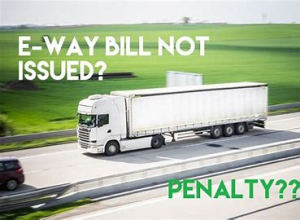 Temporary goods transfers constitute an indispensable trade artery for enterprises wanting to optimize productivity and asset utilization by leveraging external partner skills or infrastructure through job work mechanisms spanning outsourced activities like packaging, tooling, labeling, etc.
However, keeping associated documentation, like e-way bills, integral to such practices remains vital. Let’s assess why:
Temporary goods transfers constitute an indispensable trade artery for enterprises wanting to optimize productivity and asset utilization by leveraging external partner skills or infrastructure through job work mechanisms spanning outsourced activities like packaging, tooling, labeling, etc.
However, keeping associated documentation, like e-way bills, integral to such practices remains vital. Let’s assess why:
 When we talk about job work, aspects like skills leverage, demand variability buffering, and reduced asset stubs occupying factory spaces provide perceivable virtues, attracting enterprises to adopt such models and enabling them to stay focused on achieving core competence through outsourced routes.
However, if associated documentation compliance requirements get undermined in pursuit of trivial shortcuts for quick savings, the pitfalls can outweigh the risks in the long run. Let’s see how:
When we talk about job work, aspects like skills leverage, demand variability buffering, and reduced asset stubs occupying factory spaces provide perceivable virtues, attracting enterprises to adopt such models and enabling them to stay focused on achieving core competence through outsourced routes.
However, if associated documentation compliance requirements get undermined in pursuit of trivial shortcuts for quick savings, the pitfalls can outweigh the risks in the long run. Let’s see how:
Consequences of Missing the E-Way Bill in Job Work
While other obvious penalties exist, the absence of an e-way bill predominantly threatens business trust, affecting continuity.-
Customer Reliability Deficit
-
Working Capital Blocks
-
Deferred tax costs
Penalties for Not Using E-Waybill in Job Work
The mandate for e-way bill integration for job work supply chain movement draws statutory backing under the following GST provisions:-
Section 122, CGST Act
-
Section 129, CGST Act
-
Second Proviso to Rule 138
-
Rule 55 of the CGST
Job Work Compliance and E-Waybill Repercussions
Mere formulation serves little until regulated perceive innate value from adherence. For documenting authorities, value emerges from:
-
Revenue Visibility
-
Deterring Unlawful Diversion
-
Uniform Procedural Discipline
| Key Aspect | E-Way Bill Relevance |
| Goods Dispatch | It helps establish a goods movement trail from the principal’s premises. |
| Transit Recording | Transporter reconciliation integrates vehicle and item details, enabling tracking. |
| Processing Linkage | Links between the principal and job-worker aiding recognition. |
| Productivity Trail | Provides inventory volume visibility, indicating processing output scales. |
| Taxation Linkage | Reconciles documentation with return mechanisms for credibility. |
Risks of Not Generating an E-Waybill for Job Work
Temporary goods transfers constitute an indispensable trade artery for enterprises wanting to optimize productivity and asset utilization by leveraging external partner skills or infrastructure through job work mechanisms spanning outsourced activities like packaging, tooling, labeling, etc.
However, keeping associated documentation, like e-way bills, integral to such practices remains vital. Let’s assess why:
-
Business continuity risks
-
Financial Risks
-
Stakeholder trust risks
Impact of Non-Compliance in Job Work E-Way Bill
When we talk about job work, aspects like skills leverage, demand variability buffering, and reduced asset stubs occupying factory spaces provide perceivable virtues, attracting enterprises to adopt such models and enabling them to stay focused on achieving core competence through outsourced routes.
However, if associated documentation compliance requirements get undermined in pursuit of trivial shortcuts for quick savings, the pitfalls can outweigh the risks in the long run. Let’s see how:
-
Trade Reliability Deficit
-
Procedural Credibility Erosion
-
Reputation Dent
Legal Consequences of Omitting the E-Way Bill in Job Work
The legal provisions take a stringent stance towards consistent defaulters, leveraging circular no. 64/38/2018, which expressly states: “Small errors in e-way bills will cost Rs. 1000.Apart from the details specified in the IGST Rules, the e-way bill comprised other invoice details.” Thereby, while reasonable relief exists for minor data entry errors, consistent ignorance towards stipulated documentation protocols could attract litigation. Now let’s discuss key mitigation strategies.Mitigation Strategies
- Seek partner transporter support in generating e-way bills for the return leg.
- The principal can declare job-worker premises as additional places of business.
- Maintain diligent account records and return filings. Integration helps substantiate movement intents.
Conclusion
In summary, allowing short-term gains by diluting mandated job-related goods movement documentation like e-way bills entails hidden risks beyond just visible fines. It poses continuity of operations and stakeholder trust perils, which get magnified for enterprises entirely relying on such outsourcing trade models for sustenance. However, reputed employers also have ethical obligations towards smaller players down the chain. Hence, nudging unregistered job workers around compliance applicability aspects through handholding consultancy assistance goes a long way in preventing the spillover effect on the larger ecosystem. thereby paving the way for long-term trade harmony through a collaborative approach rather than seeking punitive resolutions.Frequently Asked Questions
-
What recourse does the principal have if an accident destroys goods while in transit back from a job worker lacking an e-way bill?
-
If a job worker defaults on quality norms where e-way bill compliance was jointly skipped to save costs initially, how can the principal legally nullify the contract and retrieve goods?
-
What actions can the principal take if an unregistered job-worker, despite commitments, delays filing mandatory returns, leading to the principal’s ITC disallowance?